

Search is changing. Your website content is no longer being read only by potential customers and traditional search engine crawlers. It may also be analysed, summarised and compared by Google AI Overviews, AI Mode, ChatGPT, Gemini and other AI-powered search platforms.
This does not mean businesses need a completely new style of writing or a collection of expensive AI optimisation plugins.
It means your content needs to be clearer.
AI systems need to understand what your business does, which subjects you know about, where you operate, why your information is trustworthy and how each page relates to the rest of your website.
In 2026, the businesses most likely to perform well in both traditional and AI search will be those that make their expertise easy to find, understand and verify.
What has changed about search?
Traditional SEO was often described as a relatively simple process:
- Choose a target keyword.
- Include it in the title and headings.
- Write a sufficiently detailed page.
- Add internal links and metadata.
- Build authority and improve rankings.
These fundamentals still matter, but AI search works differently from a conventional list of ten blue links.
When someone asks an AI search platform a detailed question, the system may investigate several connected subjects before constructing its answer.
For example, someone might ask:
“Which plumber in Preston can replace my boiler, is Gas Safe registered and has good customer reviews?”
To answer confidently, an AI system may need to understand:
- Which plumbing companies genuinely serve the customer’s area.
- Which businesses provide boiler replacement and installation services.
- Whether their engineers are Gas Safe registered.
- Whether they have relevant experience with the required type of boiler.
- What previous customers say about their work.
- Whether their services and credentials are supported by other reliable sources.
- Whether their website contains clear contact details, service areas and evidence of recent projects.
The system is not simply matching one keyword with one webpage. It is trying to understand the complete question, identify suitable sources and construct a useful response.
This is why isolated pages written solely to target keywords are becoming less effective.
Clarity is becoming an SEO advantage
A recent Search Engine Land article about the new rules of SEO made a valuable point: clarity is no longer simply a writing or user-experience consideration. It is becoming an essential part of search optimisation.
Every important page should make several things immediately clear:
- What question or problem the page addresses.
- Who the information is intended for.
- What the main answer or recommendation is.
- Who created the content and why they are qualified.
- What the reader should do next.
This helps visitors who are quickly scanning the page. It also gives search engines and language models a clearer understanding of the content.
Clarity does not mean making every article short. Some questions require detailed explanations, examples, comparisons and supporting evidence.
The important distinction is between depth and bloat.
Depth helps someone understand a subject or make a decision. Bloat delays the answer without adding anything useful.
Answer the main question early
Many business websites make visitors work far too hard to find the information they need.
A page may begin with several paragraphs of generic industry commentary before explaining the service, price, location or process the visitor searched for.
For example, a page about HGV training costs should provide a useful explanation of the likely costs near the beginning. A funeral plan page should explain what the plan includes. A local service page should clearly state where the company works.
You do not have to provide every detail in the opening paragraph. However, visitors should quickly be able to confirm that they have found the right page.
A good introduction should:
- Identify the subject.
- Provide a concise initial answer.
- Explain who the information is for.
- Preview any important considerations.
This makes your content easier to use and gives AI systems a strong summary of the page.
Use headings as signposts, not keyword containers
Headings help people scan a page and understand how its sections are organised. They also help search systems identify the subjects and relationships covered by the content.
Avoid headings that awkwardly combine several keyword variations, such as:
“Best Affordable Emergency Plumber and Boiler Repair Services Preston Lancashire”
A clearer structure might use:
- What plumbing services do we provide?
- How much does an emergency plumber cost?
- How quickly can a plumber attend?
- Boiler repairs and installations in Preston
- How to choose a reliable local plumber
These headings reflect the questions customers are likely to ask and make the page easier to scan and understand.
Relevant keywords remain useful, but they should appear naturally within clear, genuinely helpful content.
Create content that deserves to be found
Search volume alone is not a good reason to publish an article.
Before creating a new page, ask what your business can add that is not already available in dozens of similar results.
That could include:
- Firsthand experience from working with customers.
- Original photographs, examples or case studies.
- Local information that national websites overlook.
- Clear pricing or a realistic explanation of costs.
- Common mistakes you have encountered professionally.
- Practical comparisons between different options.
- An informed opinion based on real results.
An electrician could explain the faults most frequently discovered during local property inspections. A driving school could describe what happens during an actual HGV assessment. A print company could show how different banner materials perform in exposed locations.
These details demonstrate genuine knowledge. They also make the content more useful than a generic article assembled from information already available elsewhere.
Google’s guidance for generative AI search recommends creating unique, expert-led content that provides value beyond common knowledge. There is little benefit in publishing another page that says exactly the same thing as every competitor.
Build clear connections between related pages
Internal links help visitors continue their research without returning to Google. They also help search engines and AI systems understand the relationships between your services, locations and areas of expertise.
Generic links such as “click here” or “read more” provide very little context.
Use descriptive link text that explains what the destination page contains. For example:
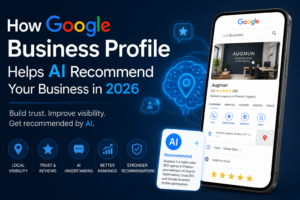
- Learn more about how Google Business Profile can help AI recommend your business.
- Discover why you may need to optimise your website for AI Mode visitors.
- Explore our SEO services for Preston businesses.
A group of well-connected pages can demonstrate far more expertise than a collection of isolated blog posts.
Your main service pages should link to relevant supporting guides, while those guides should link back to the service that helps customers take the next step.
Improve valuable existing content before publishing more
Many websites do not need dozens of new articles. They would benefit more from improving the pages that already receive impressions, attract visitors or generate enquiries.
Google Search Console can help identify pages that:
- Receive plenty of impressions but relatively few clicks.
- Rank just outside the strongest search positions.
- Have gradually lost traffic.
- Contain outdated information.
- Attract visitors but produce few enquiries.
A meaningful update could include:
- Providing a clearer answer near the beginning.
- Removing repetitive or outdated sections.
- Adding firsthand examples or evidence.
- Improving the headings and page structure.
- Adding relevant internal links.
- Updating prices, regulations or statistics.
- Adding useful photographs, diagrams or case studies.
Simply changing the publication date from 2024 to 2026 does not make an article current. The information and usefulness of the page must genuinely improve.
Make your expertise easy to verify
AI search platforms need reasons to trust the sources they use. Unsupported claims and vague marketing language make that more difficult.
Businesses should provide clear signals of real-world experience, including:
- Detailed author or team profiles.
- Qualifications, accreditations and memberships.
- Named locations and service areas.
- Original case studies and project examples.
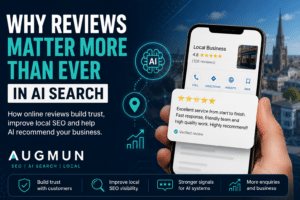
- Customer reviews from credible platforms.
- Consistent business information across the web.
- References and links to reliable external sources.
Instead of saying your company provides “industry-leading solutions,” show what you did, who you helped and what changed as a result.
Specific evidence builds more confidence than promotional language.
Use structured data accurately
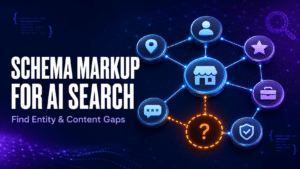
Schema markup can help search engines understand information about your organisation, articles, services, products and frequently asked questions.
However, schema is not a shortcut to AI visibility.
The information included in structured data should match what visitors can see on the page. Do not mark up reviews, FAQs, prices or services that are not genuinely present.
Structured data can clarify your content, but it cannot compensate for an unclear page, weak information or a lack of authority.
Remove unnecessary friction
A technically optimised page can still provide a poor experience.
Intrusive popups, excessive advertisements, automatically playing videos, repetitive photographs and oversized introductions can all prevent visitors from reaching the information they need.
Review important pages on a mobile phone and ask:
- Can I understand the purpose of this page immediately?
- Can I find the main answer without excessive scrolling?
- Are the headings useful?
- Do the images explain or demonstrate something?
- Is the text comfortable to read?
- Is the next step obvious?
Google specifically recommends providing a good page experience and ensuring important information is available as visible text. The easier your page is for a customer to use, the easier it will usually be for search systems to interpret.
Do not rely entirely on Google traffic
Search should introduce potential customers to your business, but it should not be the only way they can find you again.
AI-generated answers may reduce the number of clicks available for some informational searches. Rankings and search-result layouts can also change without warning.
Encourage visitors to remember or reconnect with your business through suitable channels such as:
- An email newsletter.
- Useful downloadable resources.
- Social media communities.
- YouTube or instructional video.
- Branded search.
- Repeat visits and customer accounts.
You do not need to use every available platform. Choose the channels that suit your customers and that your business can maintain consistently.
A practical AI search content checklist
Before publishing or updating an important page, check that:
- The main subject and answer are clear near the beginning.
- The content is written for a defined audience.
- Headings accurately describe each section.
- The page includes genuine expertise or firsthand experience.
- Important claims are supported by evidence.
- Related pages are connected using descriptive internal links.
- Business, author and location information is consistent.
- Schema accurately reflects the visible content.
- The page works properly on mobile devices.
- Every section, image and FAQ provides a useful purpose.
- The visitor has an obvious next step.
Clarity is not an AI trick
There is no special plugin, word count or schema type that guarantees your business will be cited by ChatGPT, Google AI Overviews or AI Mode.
The most sustainable approach is to create content that answers real questions, demonstrates genuine experience and makes your business easy to understand.
Write for the customer who wants a quick answer. Write for the customer who needs enough detail to make a confident decision. Structure the information so search engines and AI platforms can understand it too.
That is not abandoning traditional SEO. It is applying its most important principles more effectively.
If your website contains valuable information but is not attracting the visibility or enquiries it should, Augmun can review its content, structure, internal linking and AI search readiness. Contact us to discuss an SEO and AI visibility strategy for your business.
Frequently asked questions
Do I need a special plugin to optimise content for AI search?
No plugin can guarantee inclusion in AI-generated answers. Concentrate on clear content, technical accessibility, internal linking, demonstrated expertise and accurate structured data.
Should AI search content be shorter?
Not necessarily. Content should be long enough to answer the question properly without unnecessary repetition. A complex subject may require a detailed guide, while a simple question may only need a concise answer.
Are keywords still important in AI search?
Yes. Keywords help search systems and users understand the subject of a page. However, they should be supported by comprehensive topic coverage, clear entities, genuine experience and natural language.
Can updating old content improve AI visibility?
Improving useful existing content can strengthen its relevance and authority. The update must be meaningful, such as adding current information, better examples, clearer answers or stronger internal links.
Does schema make a website appear in AI Overviews?
Schema can help search engines interpret page information, but it does not guarantee inclusion in AI Overviews. It must accurately represent content that visitors can see on the page.
How can a local business improve its chances of being recommended by AI?
Maintain consistent business information, create authoritative service and location pages, earn genuine reviews, demonstrate firsthand experience and ensure your website clearly explains what you do and where you work.

Chris Giles Snr built his first client website in 1995 and has remained at the leading edge of web development and SEO ever since. He is a Fellow of The Chartered Institute of Marketing (FCIM).